Embroidery is the right decoration for polos, hats, jackets, fleece, and any garment where dimensional stitched thread reads as premium. On The Island Apparel digitizes every new design in-house and stitches it on commercial multi-needle, multi-head embroidery machines at our Huntington, New York shop — left chest, full back, hat front, sleeve, name + title combos. It beats DTF on woven textures, structured caps, and any program where the apparel needs to outlast two-plus seasons of laundry. No minimums, your stitch file stays on file for free.
Custom Embroidery · Long Island NY
On The Island Apparel digitizes and stitches every embroidery order in-house on commercial multi-head machines in Huntington, New York. Polos, hats, fleece, jackets, work shirts, and uniforms — left chest, full back, hat front, sleeve, name + title. No outsourcing to a digitizer in another time zone, no brokered order farms, no week-long handoff between vendors. You talk to the people running the machine, and your stitch file lives on our system forever so the second order is faster than the first.
Embroidery on On The Island Apparel is produced by EmbroideryLI
On The Island Apparel sells the garment, the brand, and the program. The actual thread embroidery — the multi-head machine runs, the digitizing, the hat-front curves, the patches — is produced by our sister production house EmbroideryLI. Same Huntington NY operations team, same founders, same ownership, dedicated embroidery shop floor. When you order embroidered apparel from OTIA, the needle work happens at EmbroideryLI and ships out the same coordinated workflow.
What is custom embroidery, and where does it shine
Embroidery is a decoration method that stitches your artwork into the garment with thread on a commercial computerized sewing machine. It is not a print, not a transfer, and not bonded to the surface. The needle penetrates the fabric and anchors the thread on both sides, which is why a properly digitized embroidered logo typically outlasts the garment it lives on.
The workflow is three steps. First, your artwork is digitized — converted from a logo file into a stitch file (DST or EMB format) that tells the machine exactly which color thread to use, in what order, at what density, with what underlay, and in what path the needle takes through every part of the design. Good digitizing is craft work. A logo digitized for a tight-weave performance polo will not run cleanly on a soft fleece without retuning the densities and stabilizer. We digitize every new design in-house at OTIA, on every garment type it will run on, before anything gets to a production hoop.
Second, the garment gets hooped and loaded onto a commercial multi-needle, multi-head machine. Our machines hold up to 15 thread colors per design and run multiple garments simultaneously, which is what makes embroidery economical at run sizes that would be brutal on a single-needle home machine. Registration — keeping each thread color landing exactly where it should relative to the others — is handled by the machine's drive system, not by hand.
Third, the design gets stitched, the stabilizer is trimmed, jump-threads are clipped, and the piece is quality-checked before it leaves the floor. The result is dimensional, tactile, color-fast, and machine-washable for the life of the garment. Where embroidery shines: polos, structured hats, fleece pullovers, soft-shell jackets, woven button-downs, denim, canvas work shirts, and uniform shirts. Where it does not: photo-real artwork, gradients, or anything with more than 12–15 distinct colors. Thread is thicker than ink — fine photo detail collapses into mud. That's not a defect, it's the medium. For photo art, use DTF.
When embroidery is the right choice
Five buying scenarios where embroidery is materially the better call than DTF, and where a shop that defaults you to a cheaper transfer is doing you a disservice.
Left-chest logo on polos
If your team wears polos to face customers — real-estate brokers, sales reps, front-of-house restaurant staff, corporate office, country club staff, dealership service writers — embroidered left chest is the standard buyers expect. It reads as company-issued rather than swag. It survives 80+ commercial-laundry cycles without fading or peeling. And on a tight-weave performance polo, embroidery sits flush enough that no one notices the logo is dimensional until they look closely. DTF works on polos, but it changes the read.
Hat front (and side, and back)
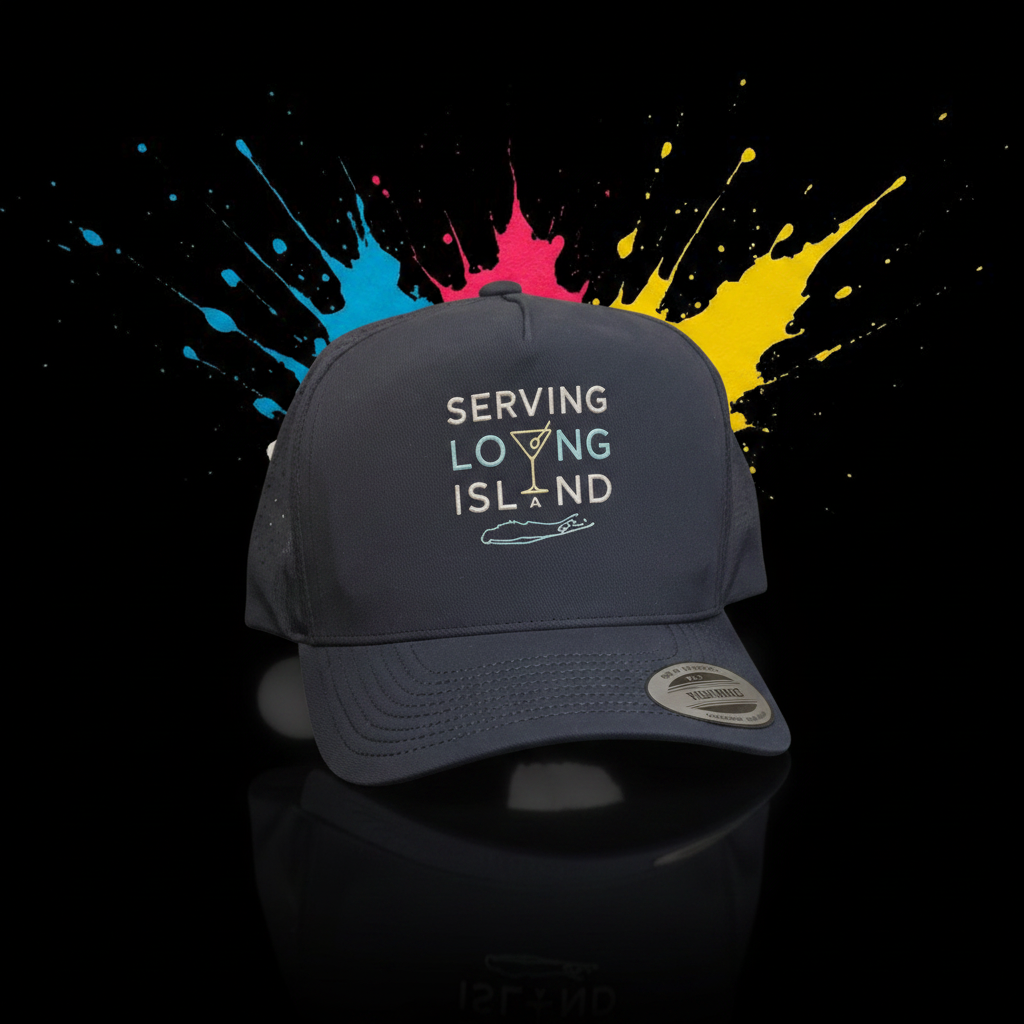
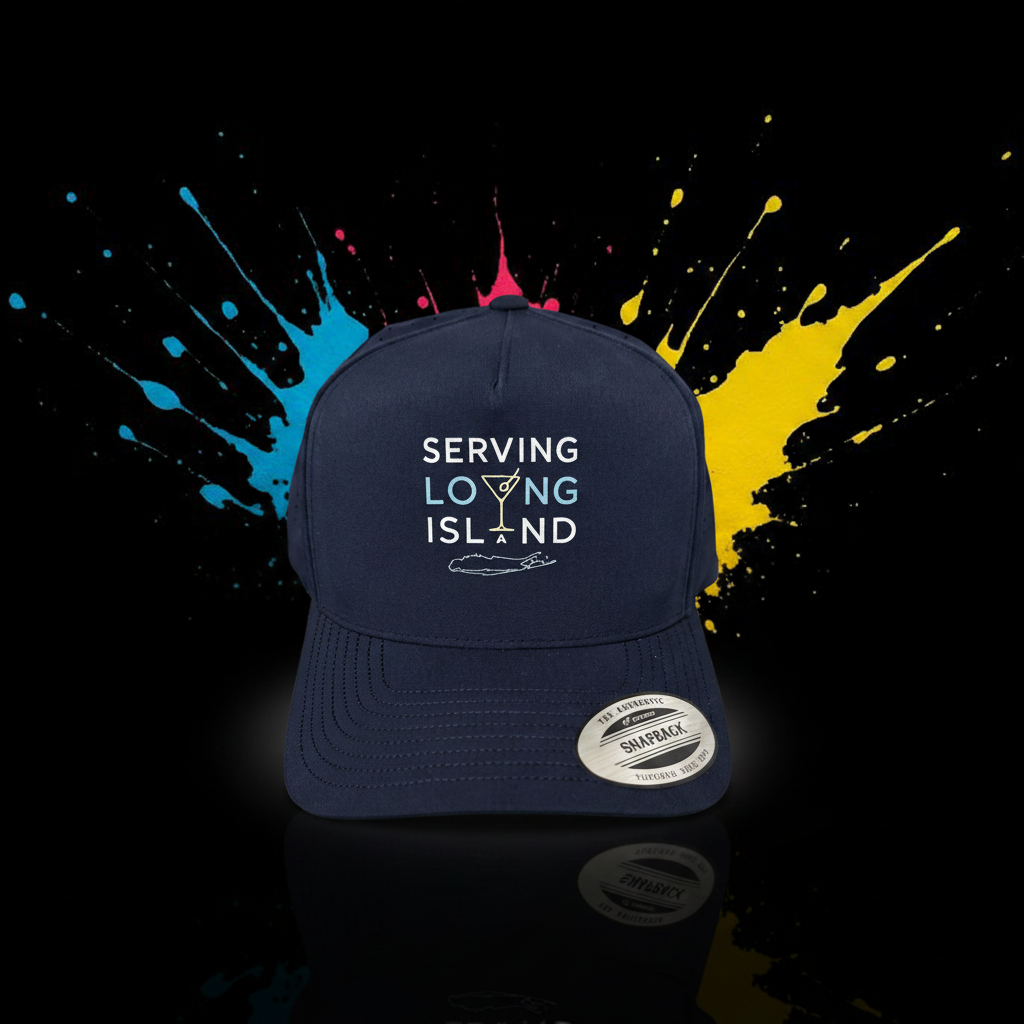
Structured caps, dad hats, trucker mesh-backs, beanies, visors — embroidery is the default for headwear and almost always the right call. A flat-stitch hat front holds its shape because the stitches help the foam crown stay structured. Add 3D puff embroidery and the logo becomes the visual feature of the cap. Hat-front $10, side $8, back $8. Hats also embroider faster than apparel because the hooping is simpler and the machine path is short — they often beat apparel turnaround.
Fleece pullovers and soft-shell jackets
Fleece and soft-shell jackets are notoriously hard for transfer prints — the fabric is too lofted to give a clean ink bond, and any print sits visibly on top of the pile. Embroidery sinks into the fleece face and disappears as decoration, becoming part of the garment. Quarter-zip pullovers, full-zip soft shells, Sherpa-lined jackets, fleece vests — all native embroidery substrates. For corporate gifts and winter team apparel, embroidered fleece is the safe answer.
Name + title combos
Personalized embroidery — first name, last name + title, name + license number, name + crew role — is where embroidery decisively beats every other method. Right-chest name $8 opposite a left-chest logo $10 is the canonical pairing for service trades, dealership service writers, healthcare front desk, hospitality managers, and country club staff. The thread doesn't crack or peel over the personalized text the way a transfer can on names that get washed weekly. We can run dozens of unique-name variants in a single batch.
Premium-positioning programs
If the garment is meant to function as a gift, an award, a member-store piece, a board-of-directors holiday apparel program, or a high-ticket corporate onboarding kit, embroidery is the positioning move. The dimensional thread reads as 'real apparel' rather than 'event giveaway,' and the unit perceived value goes up materially without the cost going up nearly as much. Country club member apparel, branded leather-patch caps, executive fleece, and any program where the recipient should feel chosen — embroidery.
Embroidery placements and what they cost
Placement is the single most-asked-about thing in embroidery. Buyers want to know: where can I put the logo, where does the name go, what does each spot cost, can I combine them. Here is the canonical OTIA matrix — these are the placement adders for embroidery, published as Anthony confirmed them. Digitizing is separate from these placement adders: a one-time $100 on your first embroidery order under $150, free on embroidery orders of $150 or more, and never charged again on reorders. The garment cost is on top of these.
Apparel placements (polos, jackets, fleece, uniforms, woven shirts)
Other embroidery placements: left chest $10 · right chest name $8 · full front $35 · full back $45.
Left chest
The default embroidery position for polos, woven button-downs, fleece pullovers, jackets, and uniform shirts. Logo sits roughly 7 inches down from shoulder seam, 4 inches in from center, sized typically 3.5–4 inches wide. This is what 80% of corporate, hospitality, real-estate, and trades programs order as their first location.
Right chest name
Personalized first name (sometimes name + title or name + license #) opposite a left-chest logo. Standard pairing for service-trade work shirts, country club staff, healthcare front desk, dealership service writers, restaurant FOH managers. We can run dozens of unique names in a single batch without changing the setup charge.
Full front
Larger center-chest emblem or crest. Used on premium polos, fleece quarter-zips, and crest-style fraternal or country-club designs where the logo is the visual hero of the garment. Larger stitch count than left chest, longer run time per piece.
Full back
Large back-yoke or center-back embroidery. Common on work jackets, fleece outerwear with a company name across the shoulders, motorcycle club apparel, and crew jackets. Highest stitch count of the apparel placements — runs longest per piece. Worth it when the apparel needs to identify the wearer at a distance.
Sleeve
Per-sleeve embroidery for accent marks — small icon, anniversary badge, secondary brand mark, crew number, or year. Often paired with a left-chest primary logo for a layered, intentional look. Priced per sleeve (so a both-sleeves order doubles the line).
Hat placements (structured caps, dad hats, trucker mesh-backs, beanies)
Hat placements: hat front $10 · hat side $8 · hat back $8.
Hat front
The default position for caps. Flat embroidery or 3D puff embroidery — both run on the same machine, just with different digitizing and stabilizer setup. Front-panel placement on structured caps, dad hats, trucker mesh-backs, and beanies. This is what 95% of buyers mean when they say 'embroidered hats.'
Hat side
Secondary mark on the left or right side panel of the cap — usually an icon, monogram, year, location code, or sponsorship lockup. Pairs with a hat-front primary mark to add visual layering. Priced per side, so left + right doubles the line.
Hat back
Back-panel embroidery, typically above the closure on a snapback or below it on a fitted cap. Used for secondary brand text, city name, year, or sponsor mark. Often the cheapest way to add a third 'touch' of branding to a single cap without going to a custom-built decorated panel.
What embroiders cleanly — by garment
A practical fit matrix. Some garments are native embroidery substrates; some are technically possible but DTF is the better call. Click through to browse the catalog for each category.
Custom polos
IdealThe single best embroidery substrate. Tight-weave performance polos and cotton piques both run beautifully. Left-chest logos disappear flush into the weave; full-front crests pop dimensional. This is the default embroidery garment for B2B programs — corporate, hospitality, real-estate, country clubs.
Browse custom polosCustom uniforms
IdealIndustrial-laundry-safe work shirts, mechanic shirts, security uniforms, healthcare scrubs, and hospitality apparel all embroider cleanly and survive commercial-wash cycles where transfer prints fail by month two. Name + logo pairings are the canonical uniform decoration.
Browse custom uniformsCustom jackets
IdealSoftshells, fleece-lined jackets, insulated parkas, coach jackets, and bomber jackets all embroider as their primary decoration. The fabric weight handles dense stitch counts without distortion, and the dimensional thread reads premium against the heavy shell.
Browse custom jacketsCustom hats
IdealEmbroidery is the default for headwear — flat stitch on structured caps, 3D puff on crown-front logos, low-profile flat on dad hats and trucker mesh-backs. Hat embroidery is faster per piece than apparel because hooping is simpler and the design area is bounded.
Browse custom hatsCustom hoodies
Good fitEmbroidery looks excellent on heavier-weight cotton fleece hoodies, especially for left-chest crests on quarter-zips and full-zips. DTF is faster and cheaper for large front-or-back hoodie graphics — embroidery wants smaller, denser, dimensional marks. Use embroidery for premium-positioning fleece, DTF for big logo art.
Browse custom hoodiesCustom tees
Mixed — usually DTFEmbroidery on lightweight cotton tees is possible but rarely the right call. The fabric is thin enough that you can sometimes feel the stitch from the inside, and the dimensional logo can pucker on softer cotton. For tees, DTF is almost always the better answer. The exception: small left-chest text on a heavy-weight tee for a uniform program.
Browse custom teesDigitizing and artwork — what to send and what we do with it
The ideal artwork file for embroidery is a vector logo — AI, EPS, SVG, or PDF with outlined fonts — because vectors scale cleanly and have crisp edges that translate well into stitch paths. If you have vector, send vector. We accept high-resolution PNG and JPG (300 DPI at print size) as well — most logos we receive arrive as PNGs and we work with them. If your art is low-res, social-media-grade, or only exists as a phone-camera snapshot, we'll vectorize it in-house before digitizing. There is no separate charge for vector cleanup on a normal logo.
Digitizing — the actual conversion from logo file into stitch file — is a one-time setup per design, and it carries a flat $100 charge on your first embroidery order, but only when that order's embroidery subtotal is under $150. Cross $150 on your first order and digitizing is free. Text-only lettering with no logo never carries the fee, at any order size. We do every digitization in-house at OTIA, on the actual fabric your run will live on, before anything reaches a production hoop. Once your design is digitized, the stitch file lives on our system forever. Your second order doesn't pay digitizing again, regardless of size. Reorders go straight from request to machine, which is why repeat embroidery customers see materially faster turnaround on the second run than the first.
Color limits are practical, not absolute. The machine holds up to 15 thread colors per design, and we color-match to standard thread libraries (Madeira and Isacord) — both are deep enough to hit almost any brand color buyers care about. Where embroidery falls down is photo art and gradients: thread is thicker than ink, and fine photo detail collapses into mud. If your logo has a gradient, a photograph, or more than 12–15 distinct colors, that is the case for DTF, not embroidery. We will flag this on your proof before quoting, not after stitching.
Lead times and what actually drives them
Standard embroidery production is 72 hours from mockup approval for in-stock thread colors and in-stock garments. That clock starts the moment you sign off on the digital proof — not when you submit the quote, not when you send artwork. Rush production (24-hour, 48-hour, same-day for small batches) is available on a case-by-case basis depending on the size of the run and what's already on the machines. Tell us your in-hand date when you submit, and we'll tell you what's achievable for your specific job.
What actually slows embroidery down is rarely the stitching itself — it's the inputs. Out-of-stock garment colors (we usually catch this within an hour of quote), unusual thread colors that need to be ordered in, large hooping (full-back on a jacket runs longer than left-chest on a polo), and high stitch counts (3D puff caps with dense fills take meaningfully longer than flat-stitch text). A 5,000-stitch left-chest logo runs in roughly two minutes per piece on a single head; a 25,000-stitch full back can run 12+ minutes per piece. The machine doesn't get tired — but if you have 200 jackets at 12 minutes each on six heads, the math sets the floor.
- Flat per-piece pricing
- Same at qty 1 or 1,000
- No setup fees
- No minimums
Embroidery vs the alternatives — when each method wins
Embroidery doesn't win every job. DTF wins on full-color art and lightweight tees. Laser engraving wins on hard goods. We run all three in-house, so the recommendation we make is the one that actually fits your project — not the one we're trying to upsell. The two comparison guides below cover the most-asked questions buyers bring us.
DTF printing vs embroidery
Embroidery wins on polos, hats, jackets, fleece, and any premium-positioning garment for two-plus seasons of wear. DTF wins on full-color art, photo-real logos, gradients, and light cotton tees where the design needs more than 12–15 distinct colors. If your art has gradients or photo elements, DTF — almost always.
Read the full DTF vs embroidery guideEmbroidery vs laser engraving
Embroidery owns apparel. Laser engraving owns hard goods — drinkware, plaques, leatherette patches, wood, acrylic. The two methods almost never compete for the same order. The one real overlap is leatherette patches on caps and bags, where either method works and the call is aesthetic.
Read the full embroidery vs laser guideEmbroidery programs by industry
Six industries where embroidery is the default decoration — what we run, who it's for, and what to ask for when you submit a quote. Embroidered apparel is also a building block of most corporate merchandise programs we run — uniforms, gifts, recognition, and event swag from one shop floor.
Corporate polos + welcome kits
Embroidered left-chest logos on performance polos are the canonical corporate apparel program. We run new-hire welcome kits (polo + fleece + hat embroidered with the corporate mark), board-of-directors gift apparel, conference-staff identification polos, and quarterly all-hands swag. Repeat corporate accounts have their stitch file on permanent file — every reorder skips the digitizing step.
See corporate embroidery programsRestaurant FOH + manager apparel
Front-of-house staff in embroidered polos look noticeably more professional than staff in printed tees, and the apparel survives the laundry. Manager-tier programs add right-chest name + title opposite the restaurant logo. Hostess polos, server polos, manager button-downs, kitchen aprons — embroidery is the look that signals 'real restaurant' rather than 'pop-up.'
See restaurant embroidery programsTrades work shirts + jackets
Mechanic shirts, electrical crew shirts, HVAC service techs, plumbing crews, security uniforms — embroidered name + company logo is the industry standard for trades work apparel. The thread survives industrial-laundry cycles where transfers fail. Embroidered softshell jackets and fleece pullovers cover the cold-weather layer. Personalized names are part of the package, not an upcharge per shirt.
See trades embroidery programsCountry club + golf member apparel
Embroidered performance polos are the entire decoration language of golf and country club apparel. Member-store programs (where members shop a branded online store of club-logo gear) typically run a polo line, an outerwear line, and a cap line — all embroidered. Crest-style logos on left-chest and full-front, member-name personalization opposite the crest, and 3D puff or flat embroidery on member-edition caps.
See golf + country club programsHealthcare + medical office apparel
Embroidered polos and quarter-zips for healthcare offices, dental practices, urgent-care fronts, physical therapy clinics, and medical specialty offices. Left-chest practice logo, right-chest name + credential (RN, DPT, RDH, MD). The dimensional thread reads as 'clinical' the way a printed tee does not. Scrubs decoration is also embroidery-default — most scrub fabric handles a small left-chest logo cleanly.
See healthcare embroidery programsSchools staff + faculty
School spirit wear for students typically runs DTF; school staff and faculty apparel is almost always embroidery. Faculty polos, administration jackets, athletic department coach apparel, custodial and grounds-crew work shirts. The decoration outlasts the school year and reads as professional during back-to-school night, conferences, and public-facing events.
See schools embroidery programsOTIA's embroidery shop floor — Huntington, NY
Every embroidery order on this page is stitched on commercial multi-needle, multi-head machines at our Huntington production facility on Long Island. Not sent to a broker. Not white-labeled to a print farm in another state. Not handed to a digitizer in another country and emailed back overnight. In-house, in-shop, eyes-on the run from the moment the file hits the queue to the moment the order is packed for pickup or shipment.
What that actually means for you: we can answer questions about your specific job in real time, because the person you are emailing is in the same building as the machine that is running your order. Mockups, color tweaks, density adjustments, and rush escalations happen in minutes — not in the next business day. If a problem surfaces mid-run, we catch it on head three of six, not in the box on the customer's doorstep. The shop is a 30-minute drive from most of central and eastern Nassau and western Suffolk, and our local clients are welcome to pick up directly from the door.
Custom embroidery FAQ
The 15 most common questions we field from Long Island businesses, teams, and event organizers ordering custom embroidery for the first time.
Is there a minimum order for embroidery?
Is there a digitizing fee, and how does it work?
What file formats do you accept for embroidery artwork?
Can you embroider a photograph?
How precise is color matching?
What's the maximum stitch count you can handle?
Do you do names and numbers (jersey-style)?
Can you embroider on hats?
What's the standard turnaround time?
Can you embroider small zippered or pre-built items? (Hooping difficulty)
How durable is embroidery? Will it survive washing?
What care instructions should I give customers?
Do you do digitizing-only work for someone else's shop?
Can you do appliqué?
Can you do multi-location embroidery (logo plus name plus sleeve)?
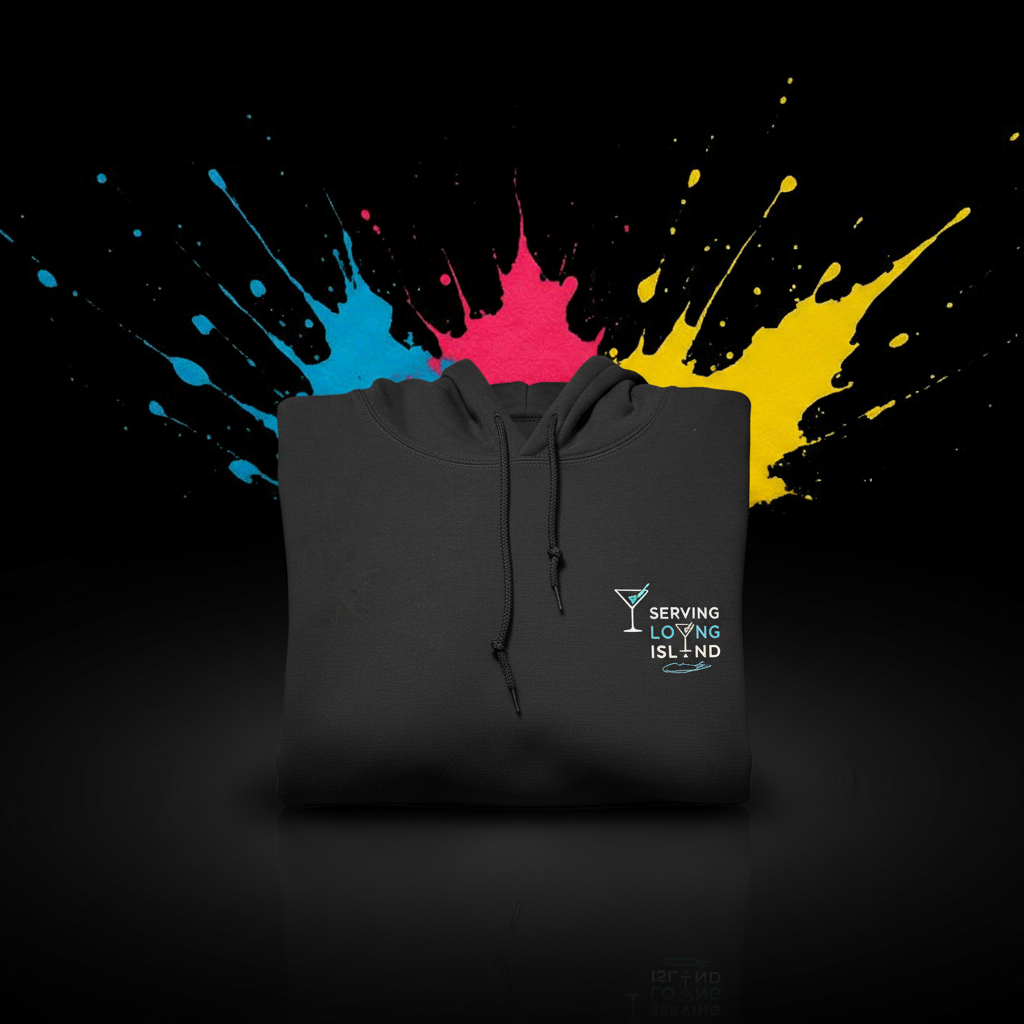
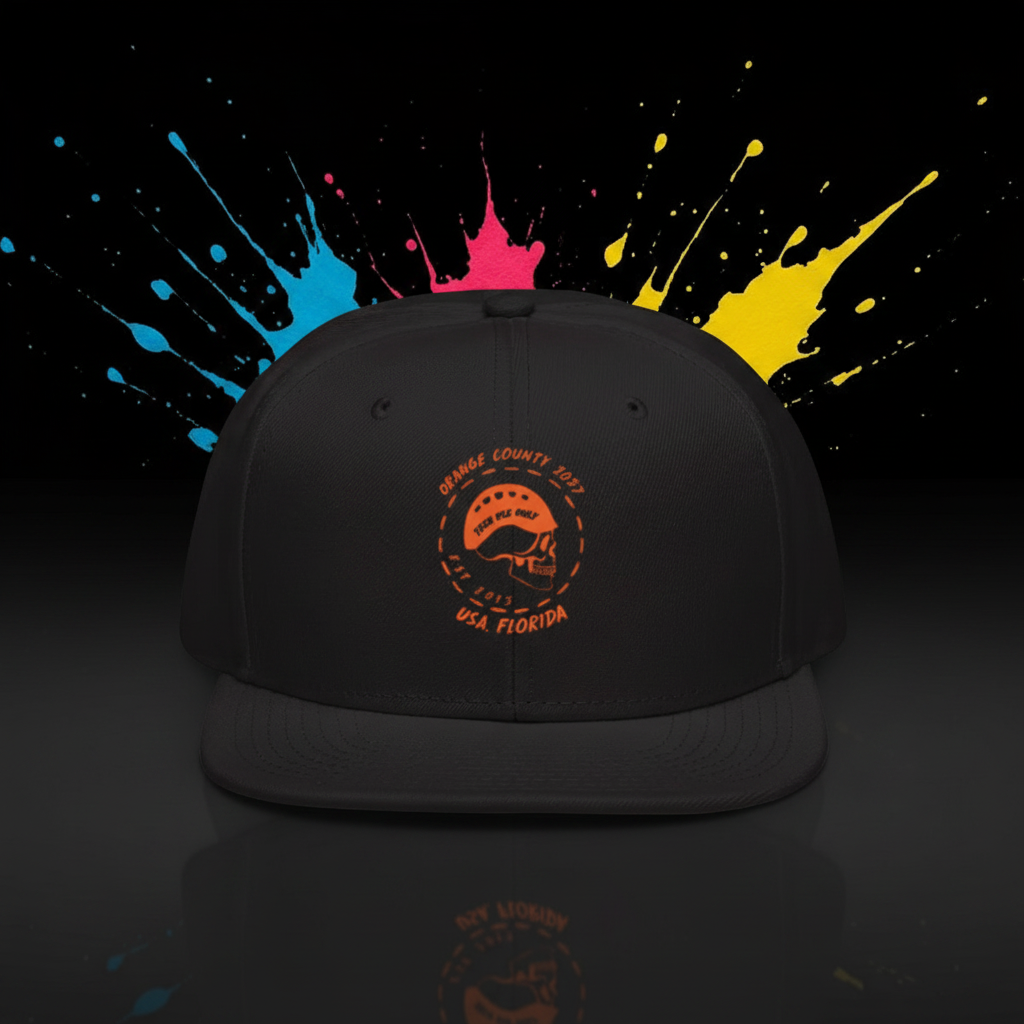
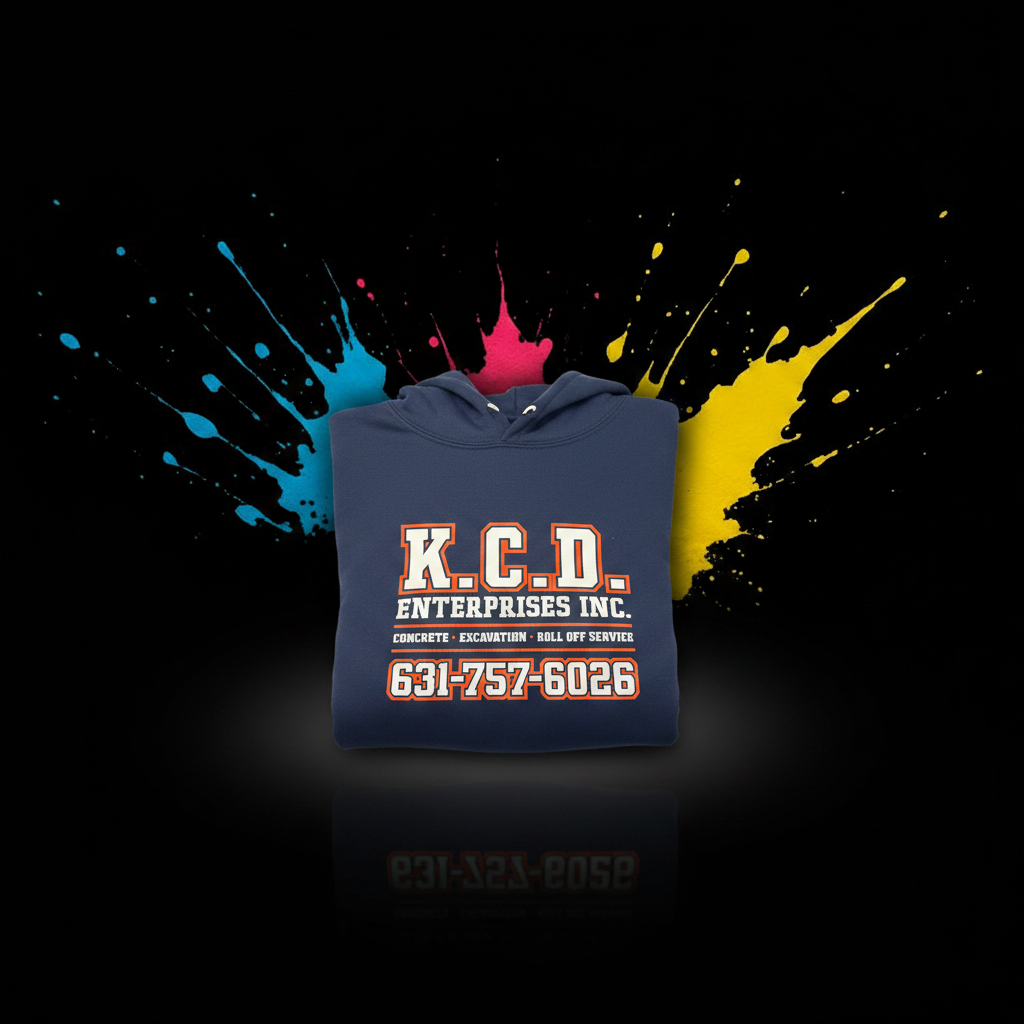
Examples
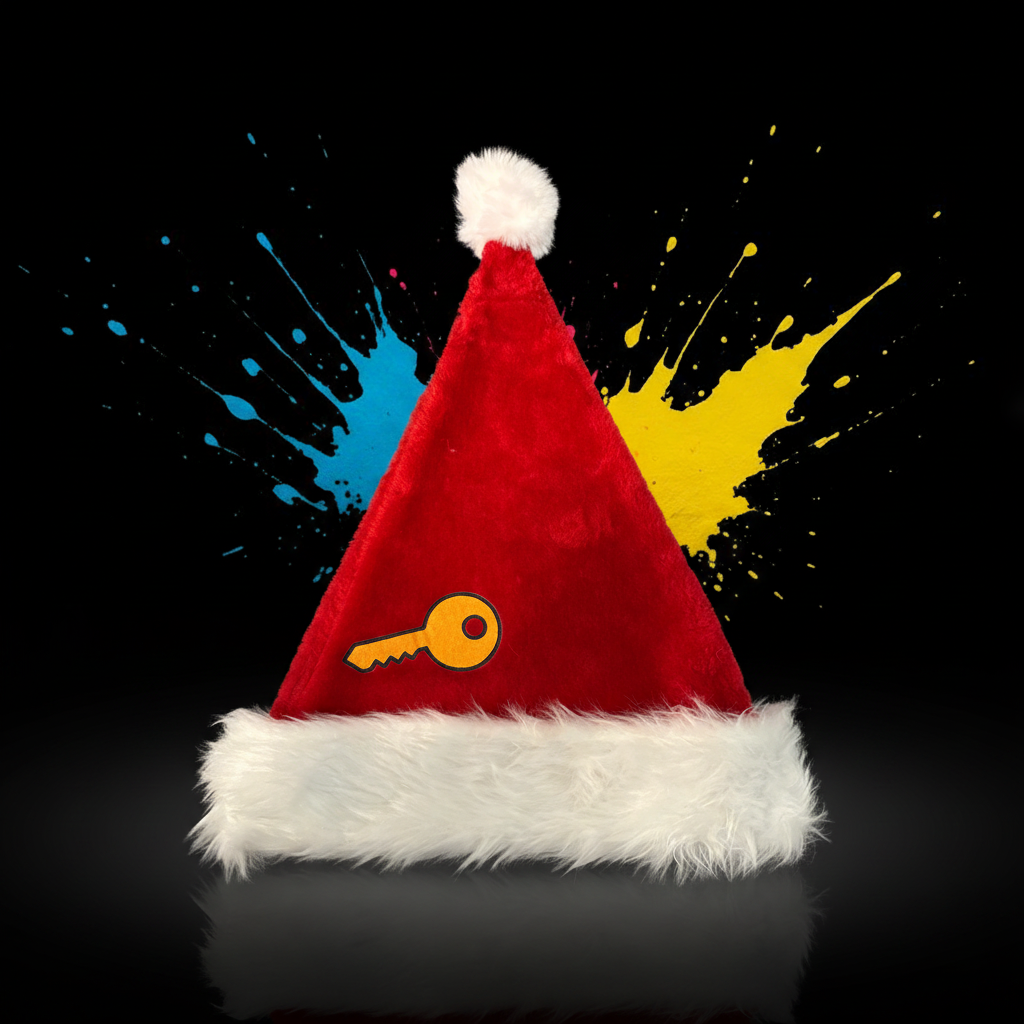
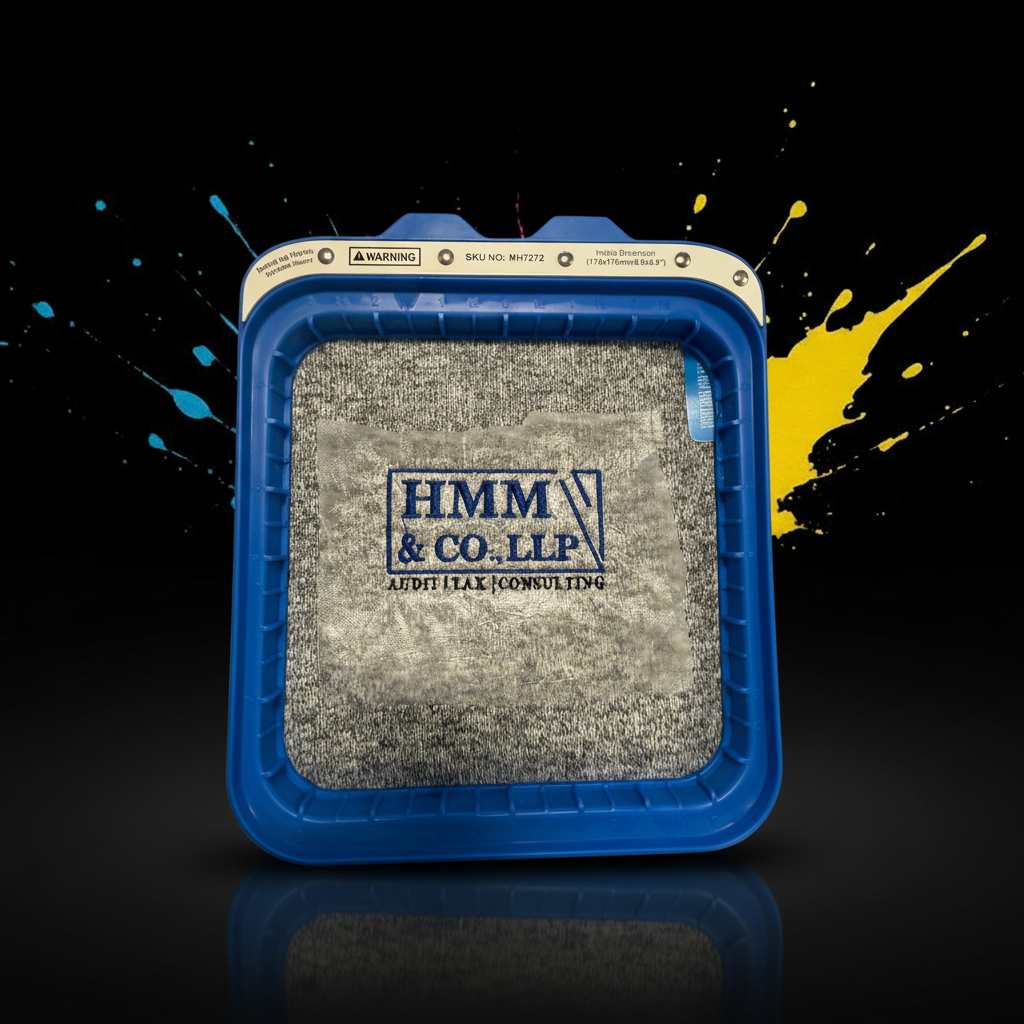
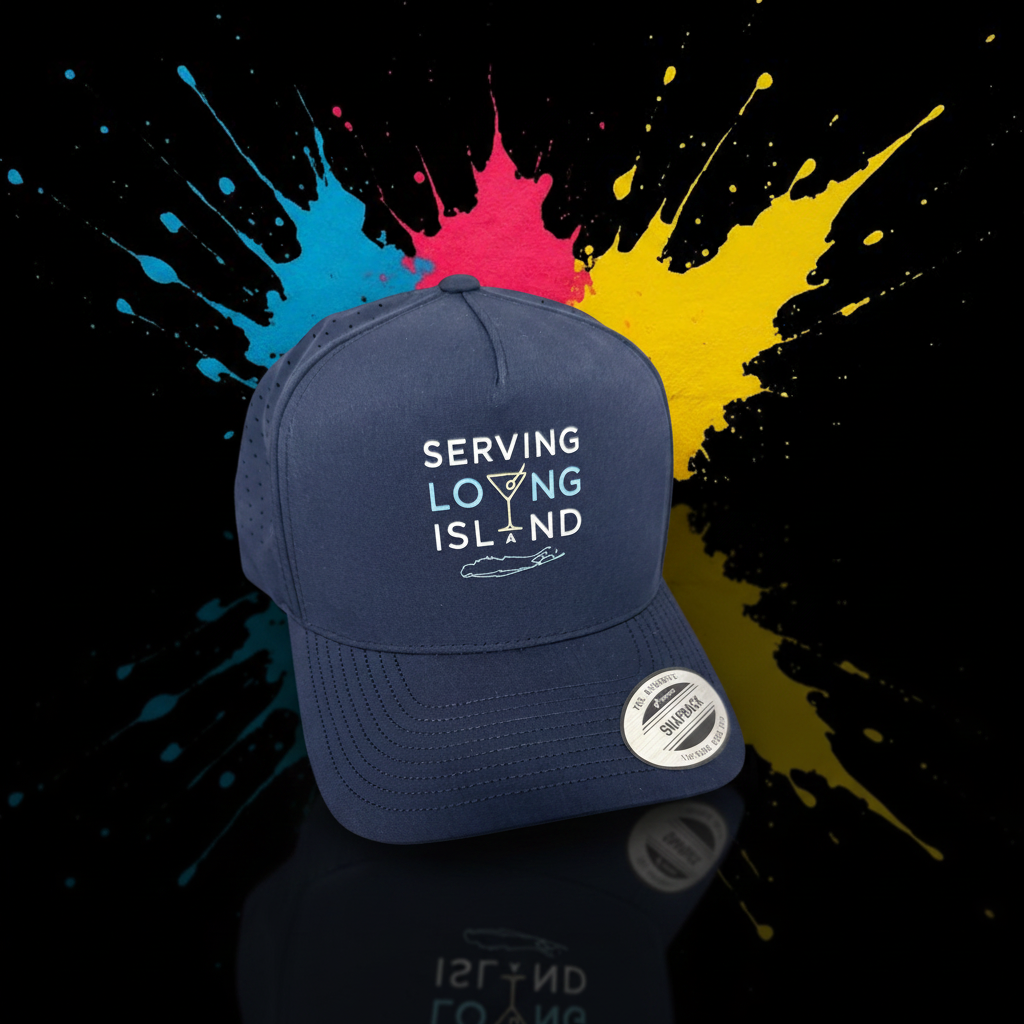
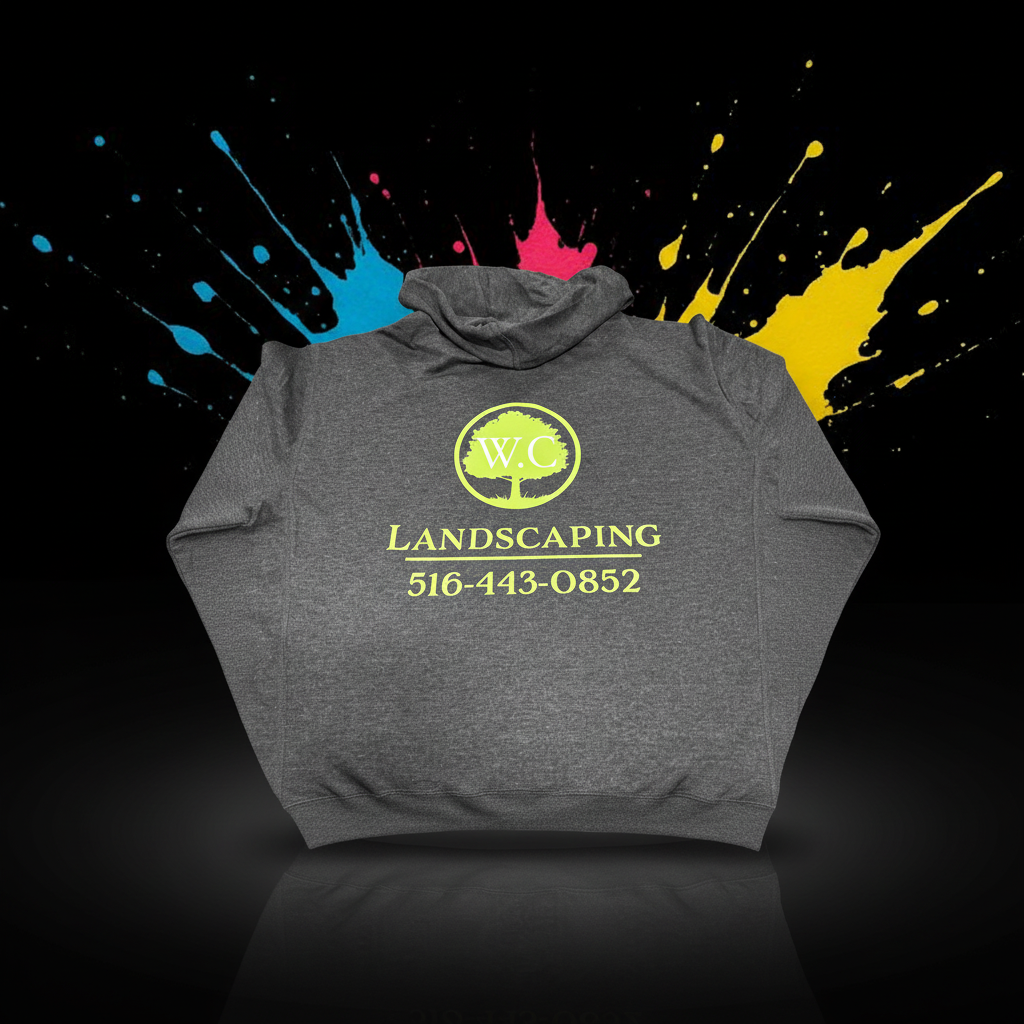
Real embroidery work from our shop
Ready to start your embroidery order?
One polo or one thousand jackets. Written quote in one business day, digital mockup for approval. Standard apparel embroidery ships within 72 hours of approval; turnaround on large runs is quoted with the job.