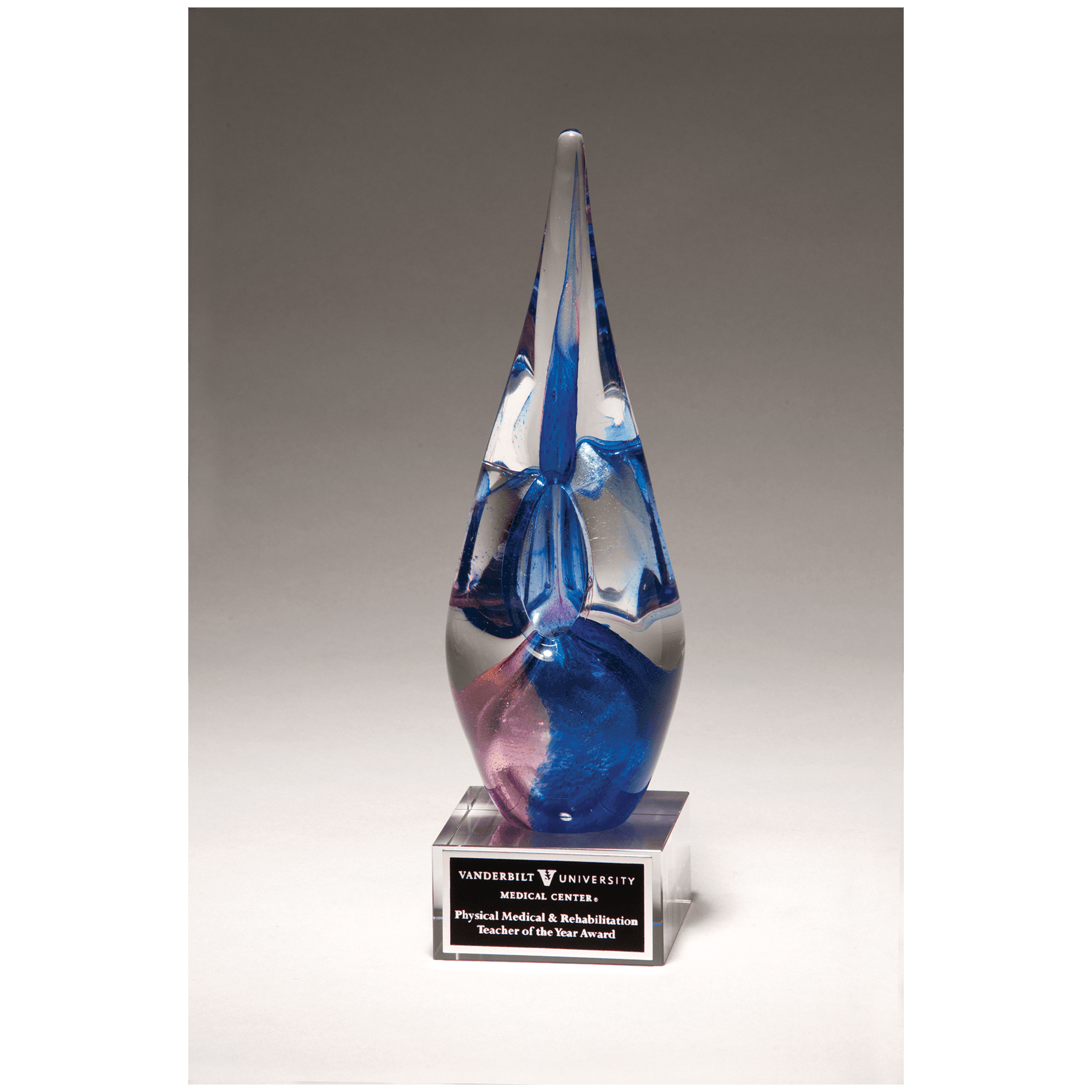
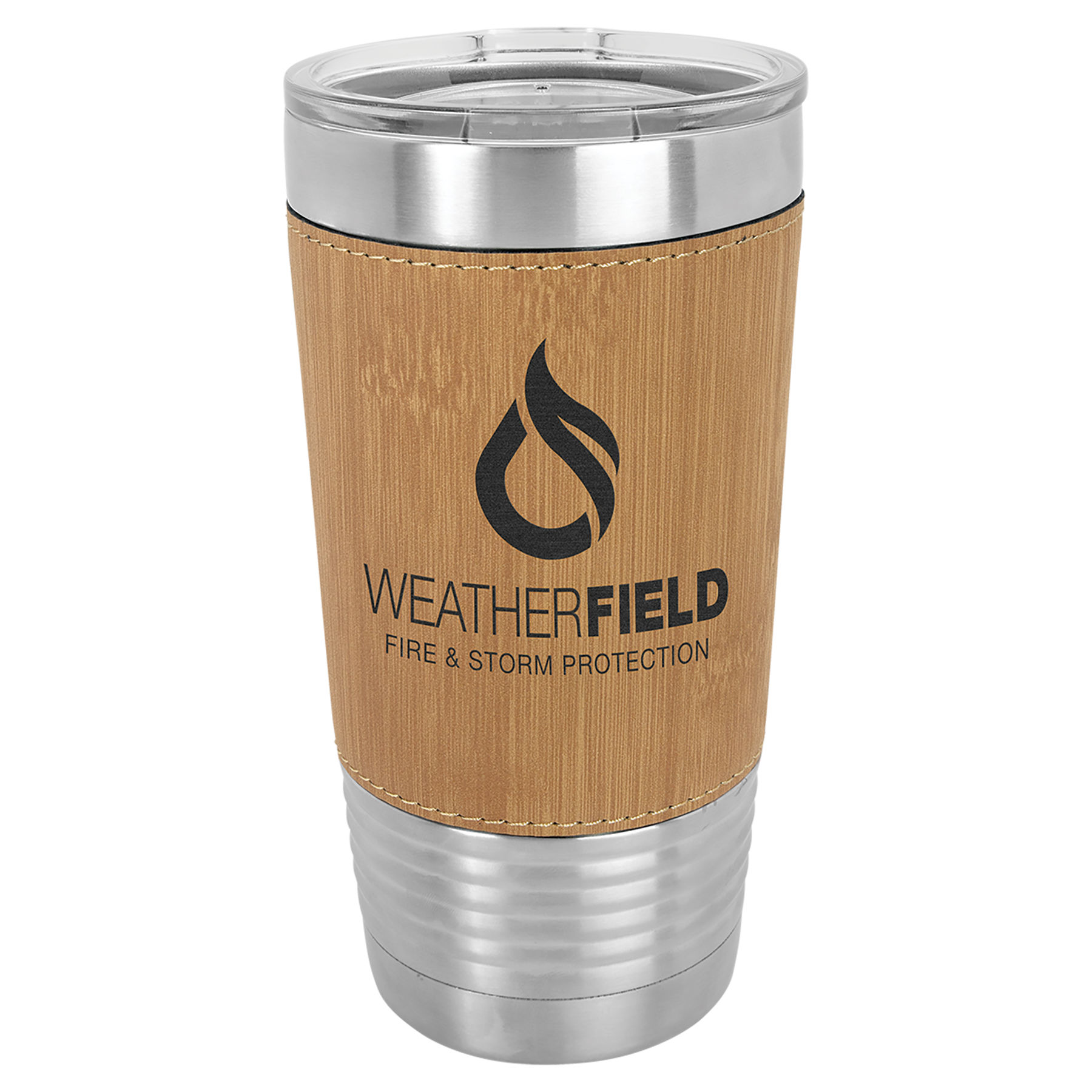
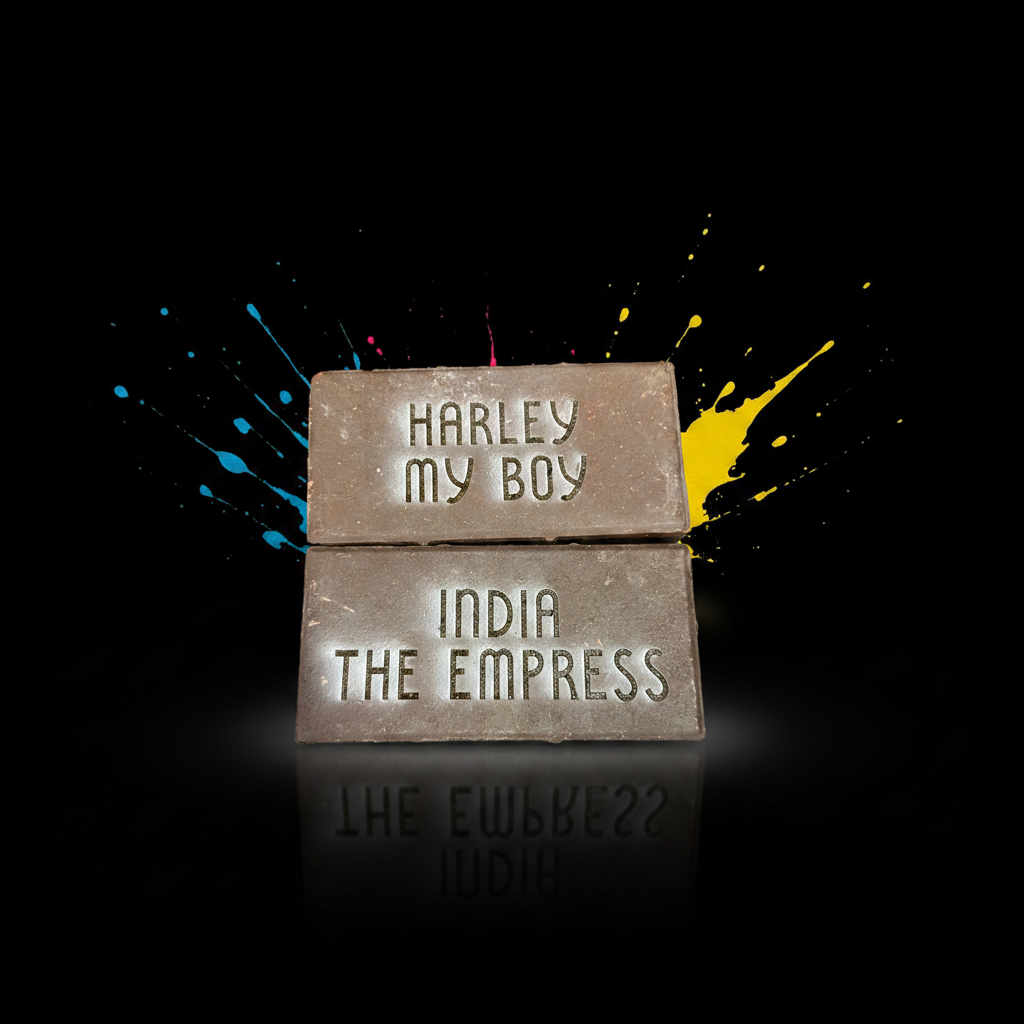
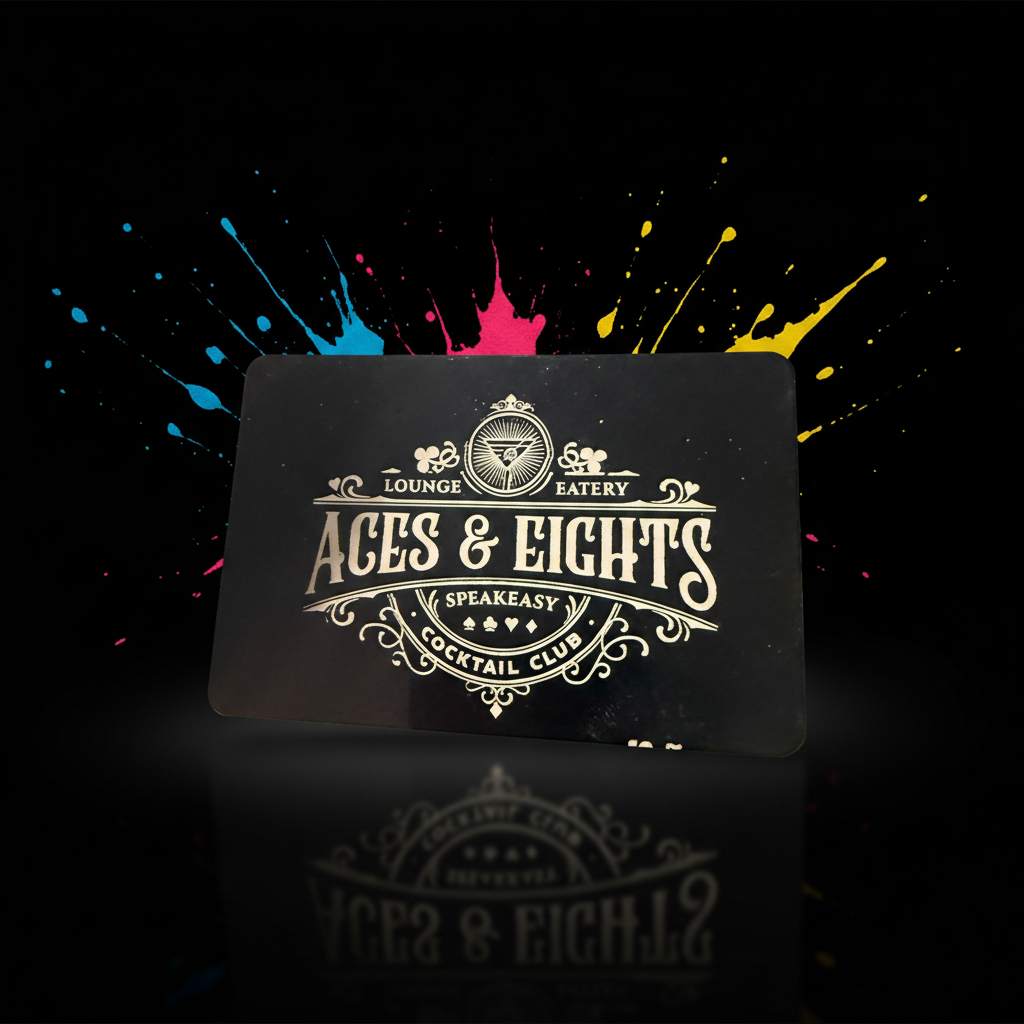
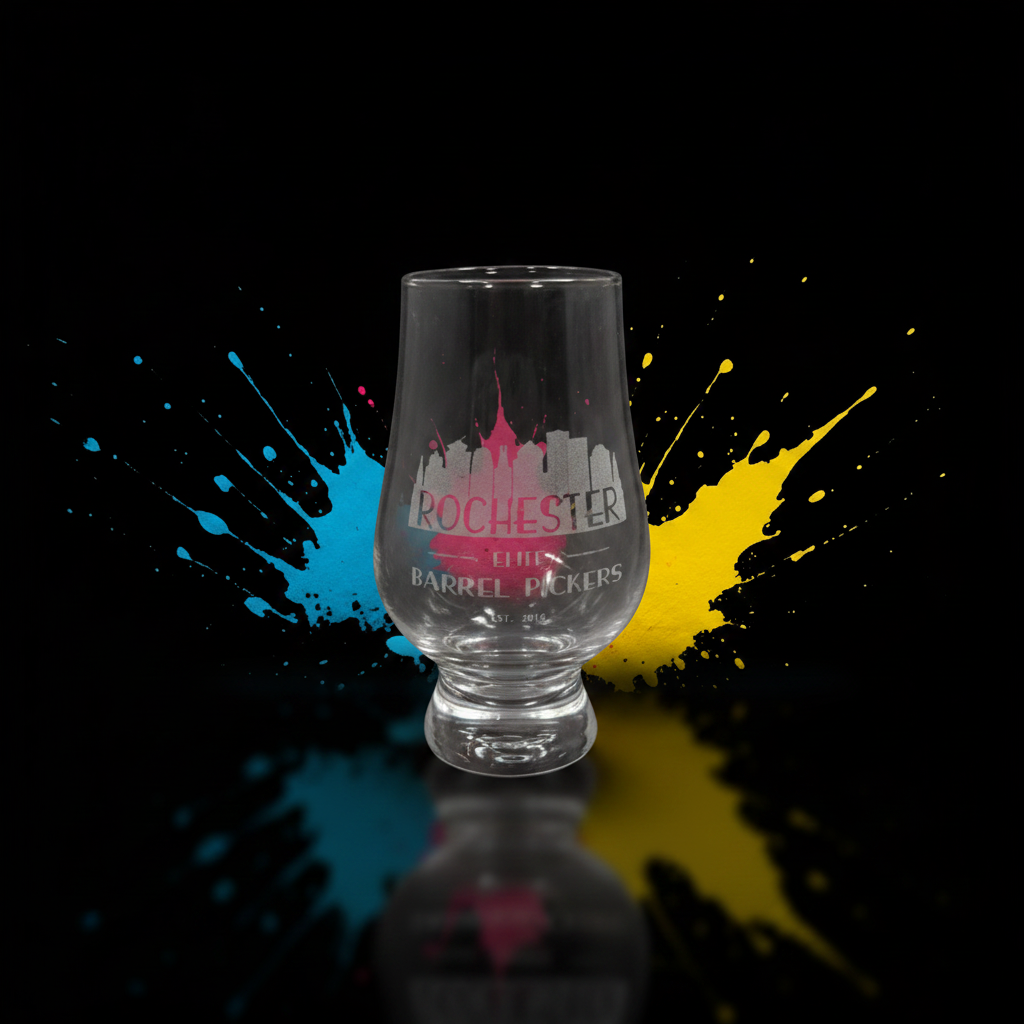
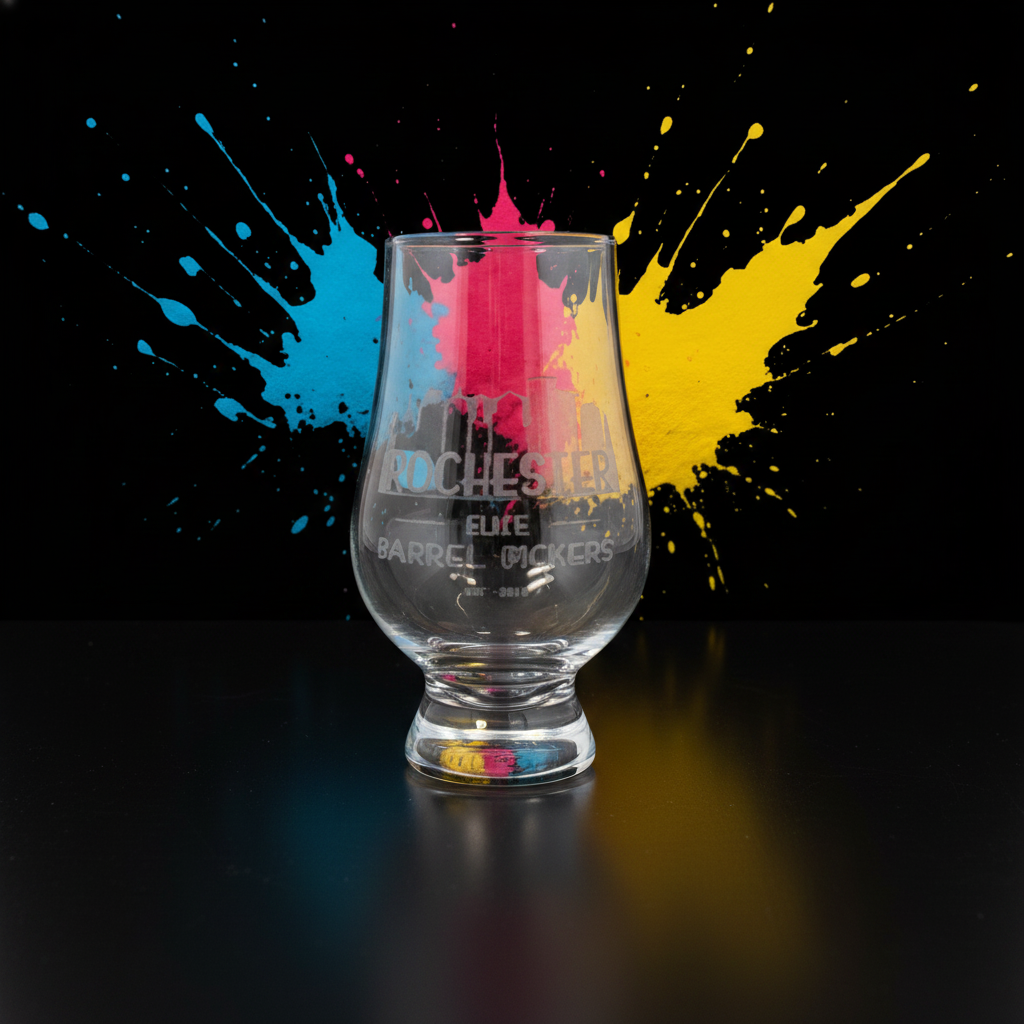
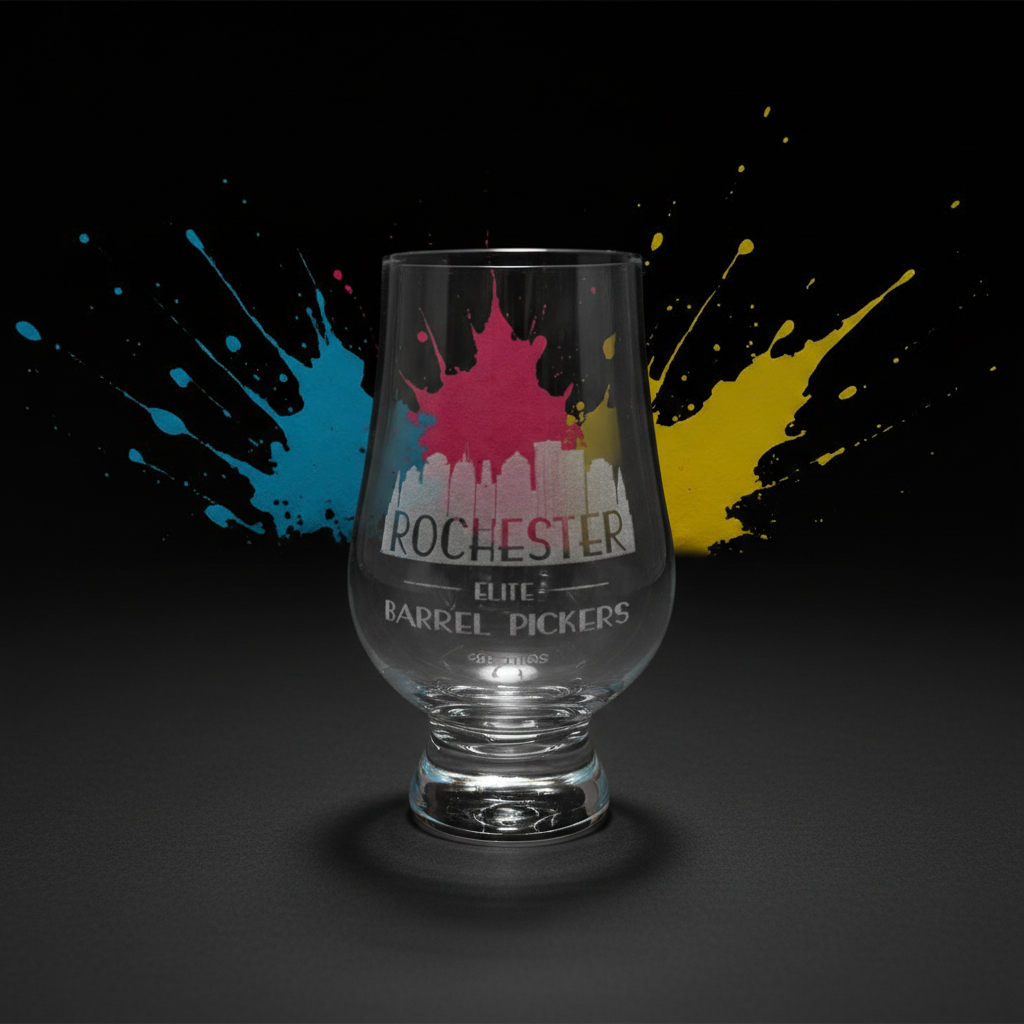
Laser engraving is a subtractive decoration process. A focused beam of light — strong enough to vaporize or carbonize a thin layer of material — traces your artwork over the surface of the item. What's left behind is the mark: a permanent line, area, or texture cut into the substrate itself. Because the mark is part of the item, it cannot peel, fade, wash off, or be scratched away with normal handling. That permanence is the whole reason buyers choose engraving over a printed or stickered alternative.
Two laser types do most of the work in this category. A CO2 laser (the kind we run in-house) handles organic and coated materials cleanly — wood, leather, leatherette, acrylic, crystal, glass, coated drinkware, anodized aluminum, brass plates. A fiber laser handles bare metal — raw stainless, raw aluminum, titanium — and is more common in industrial part marking than promotional work. Most corporate-gift, awards, and branded-merch programs run on CO2, which is why our shop is built around it.
The process is straightforward: your vector artwork (.ai, .pdf, .svg, .eps) becomes a path the laser head follows over the engraving bed. Power, speed, and focal length are calibrated per material — leatherette runs differently from acrylic, which runs differently from crystal. The result is a precise, repeatable mark, but always in a single color: the color the material under the surface becomes when burned. Anodized stainless engraves silver. Dark leatherette engraves tan. Crystal engraves frosted-white. That monochromatic constraint is the trade-off — you get permanence and precision, not full-color photo reproduction. For most corporate-gift use cases, the tonal look is exactly what makes the item read premium.